 Every business reaches a point where growth starts to feel tied to more hours, more hires, or more complexity. That assumption often leads to burnout and inefficiency.
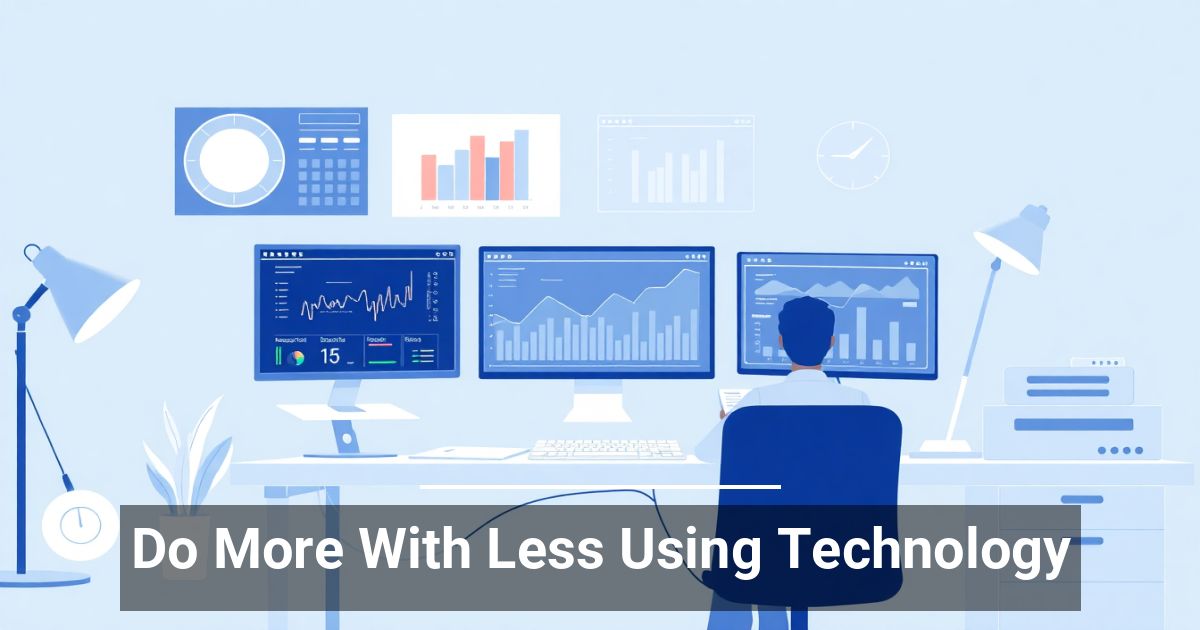
The good news? Technology can help, and the idea of “do more with less using technology” isn’t about stripping resources or lowering standards.
Rather, it’s a practical strategy to clear out the clutter that slows work down so teams can focus on what actually supports business growth. Reducing friction lets your people do better work with fewer obstacles.
What "Doing Less" Actually Means
How much of your workday is spent on tasks that don’t require deep thinking, like data entry, scheduling, file organization, and routine communication? Probably a large portion, if you’re being honest.
Improving efficiency through smart technology means removing the tasks that drain time without producing real results. It doesn’t replace effort but redirects it toward work that actually matters.
Using technology to optimize work output hands off repetitive tasks to automation tools, while integrated platforms keep information organized and accessible. Instead of switching between systems or tracking down details, employees can focus on higher-value work that requires judgment and creativity.
Removing busywork is one of the most direct examples of how technology increases productivity with fewer resources. When low-impact tasks no longer consume time, output improves without adding pressure.
Cut the Noise That Slows Everything Down
Disorganization and miscommunication often create more problems than a lack of resources. Missed emails, duplicate work, and unclear processes can quietly drain productivity across a team. Eliminating unnecessary friction supports the goal to do more with less using technology, but it’s not about working faster at all costs. It’s about working with fewer interruptions and fewer mistakes.
Improving efficiency through smart technology creates clarity. Project management tools, shared dashboards, and real-time updates reduce confusion and keep everyone aligned. Information that’s easy to find and understand eliminates the need for multiple meetings, and errors are fewer and farther between when systems guide the process. Best of all, these affordable tools already exist and are built for people without technical backgrounds.
Smarter Systems, Not Harder Work
Efficiency doesn’t come from pushing people harder but from systems that support consistent, reliable performance. Businesses that succeed in leveraging tech to achieve more efficiently often focus on small improvements that add up over time. It doesn’t mean cutting corners, but redirecting human effort toward work that actually matters.
Technology also makes it easier to scale. As demand grows, systems can handle increased volume without a matching increase in workload or headcount. That balance is key for sustainable growth, because not every business can afford to hire its way out of a bottleneck.
Focus on What Actually Matters
Being able to do more with less using technology comes down to one clear idea: remove roadblocks so people can do their best work. Removing unnecessary tasks gives teams space to focus on strategy, customer experience, and long-term goals. Technology makes that possible by handling the background noise.